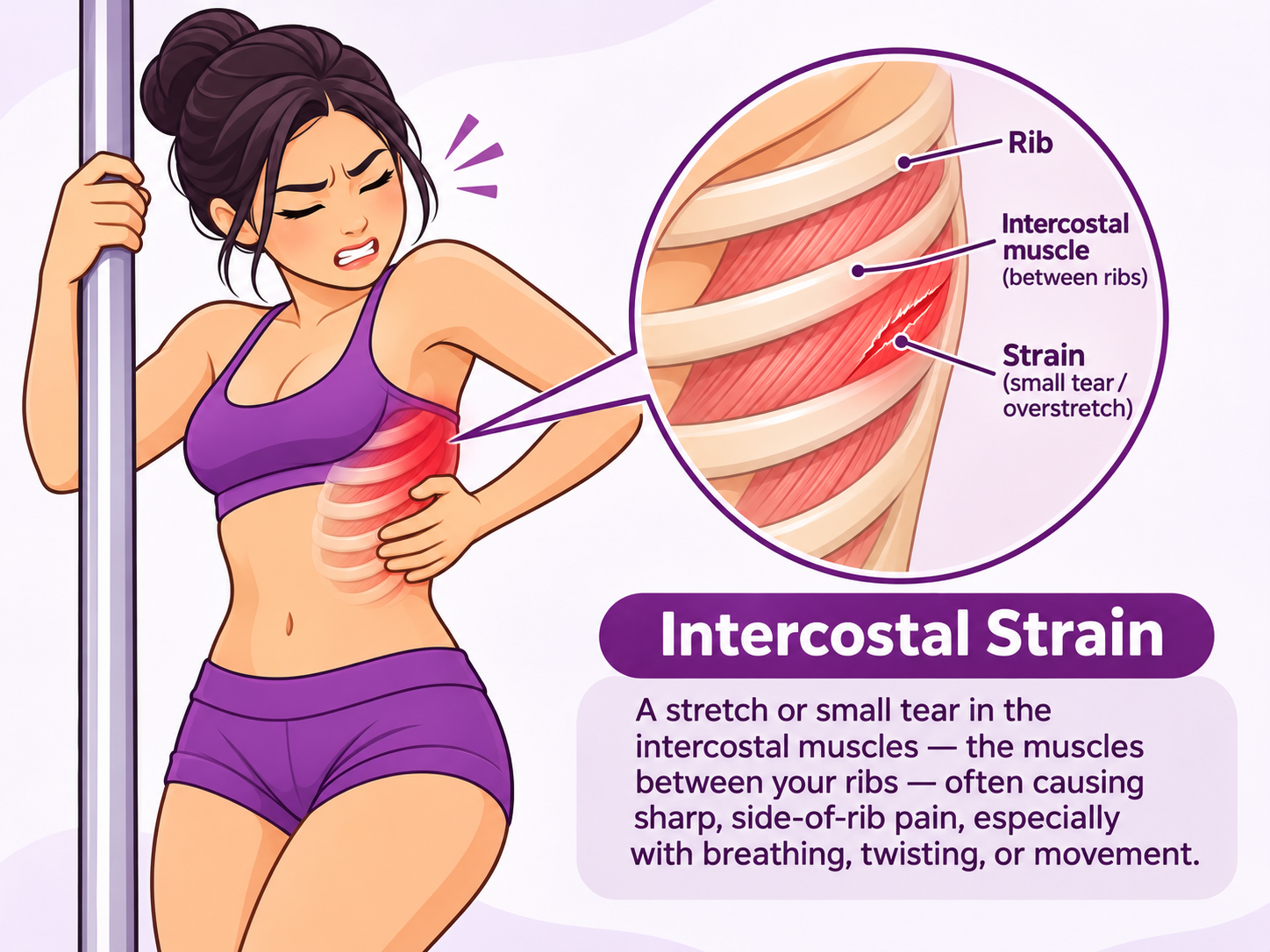
Pole Dancers with Rib Pain
What Does Rib Pain Feel Like?
Have you ever experienced sharp pain around your ribs after pole dancing? Maybe you felt something pull during an invert or shoulder mount, or started noticing pain after practising a trick that puts pressure against your ribs.
Some common symptoms of rib pain, intercostal strains, and lat injuries include:
Pain with deep breathing, coughing, or sneezing
Pain when rotating or side bending your trunk
Tenderness around the affected area
Pain when contracting or stretching the muscles around your ribs
Discomfort during daily activities, such as getting out of bed or reaching overhead
Pain when pulling with your arms, especially if the lats are involved
I've seen quite a few cases of rib pain related to pole dancing in my physiotherapy practice, and the mechanisms can be quite different depending on the dancer's experience level and the movements they're working on.
For beginner and intermediate pole dancers, I often see rib pain associated with insufficient shoulder strength or engagement. When the shoulders and core muscles aren't able to provide enough control, the trunk may have to compensate, placing additional stress on the muscles and joints around the rib cage.
This can happen during the dismount phase of a movement, such as lowering down from an invert, coming down from a shoulder mount on spin pole, or dismounting from a static pole move with rotation.
For more advanced dancers, I also see injuries caused by direct pressure against the lower ribs. Tricks such as Broken Doll or Jallegra can place substantial pressure on a relatively small area of the rib cage. This can lead to bruising, soft-tissue irritation, or sometimes irritation of the rib joints or cartilage.
What makes rib injuries tricky is that multiple structures can be involved at the same time.
For example, a dancer may lose some shoulder control during a dismount, placing a sudden eccentric load on the lats while the trunk rotates. The intercostal muscles, obliques, and rib joints may also experience additional stress during the same movement.
So, even though people often describe these injuries as an "intercostal strain," the intercostal muscles aren't necessarily the only structures involved.
Let's look at the anatomy and biomechanics behind rib injuries in pole dancing.
Understanding the Anatomy of Your Rib Cage
Your rib cage consists of 12 pairs of ribs that connect to your thoracic spine at the back. Most also connect to the sternum through cartilage, while the lowest two pairs (ribs 11 and 12) are floating ribs without a front attachment.
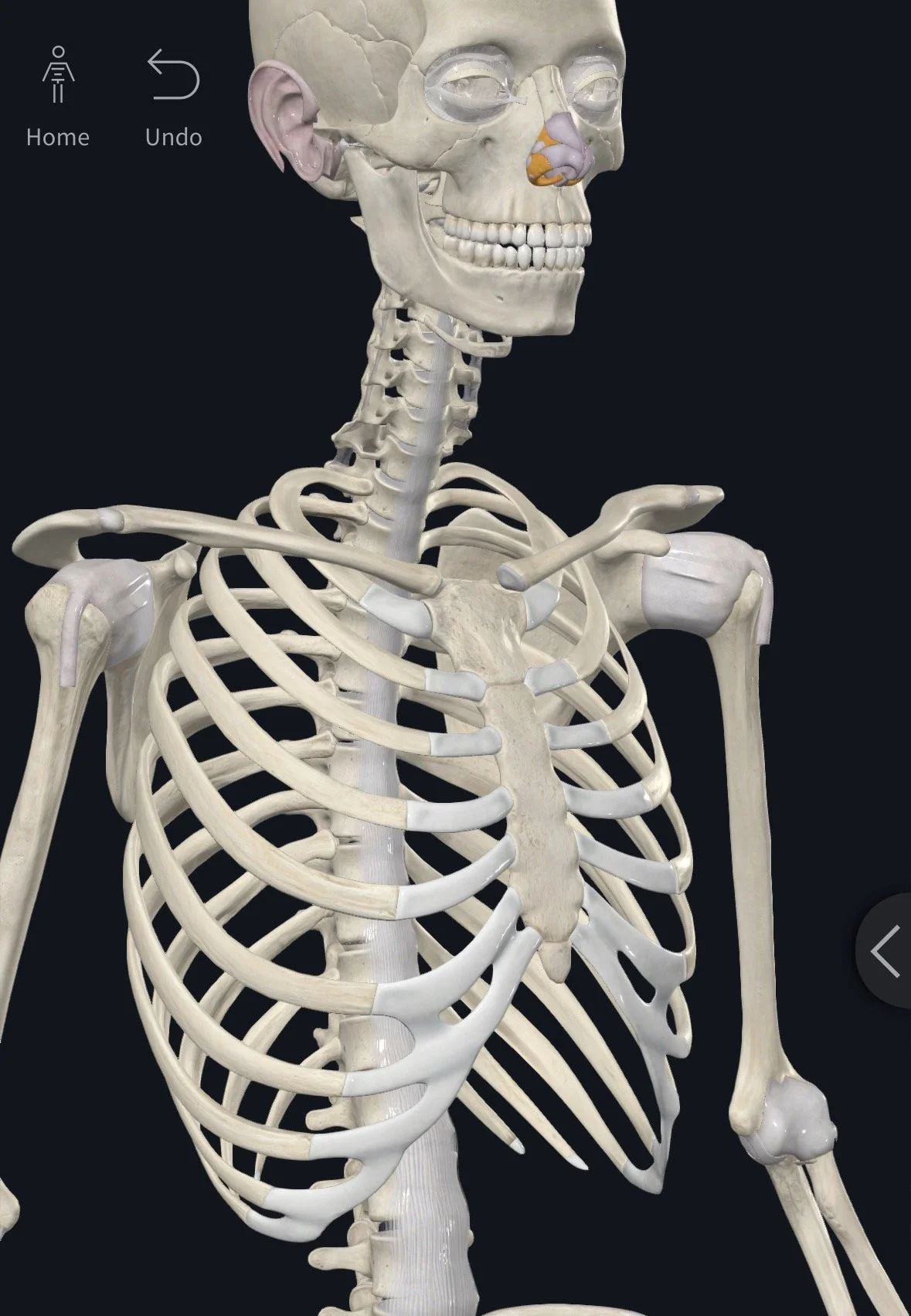
Rib cage - anterior view
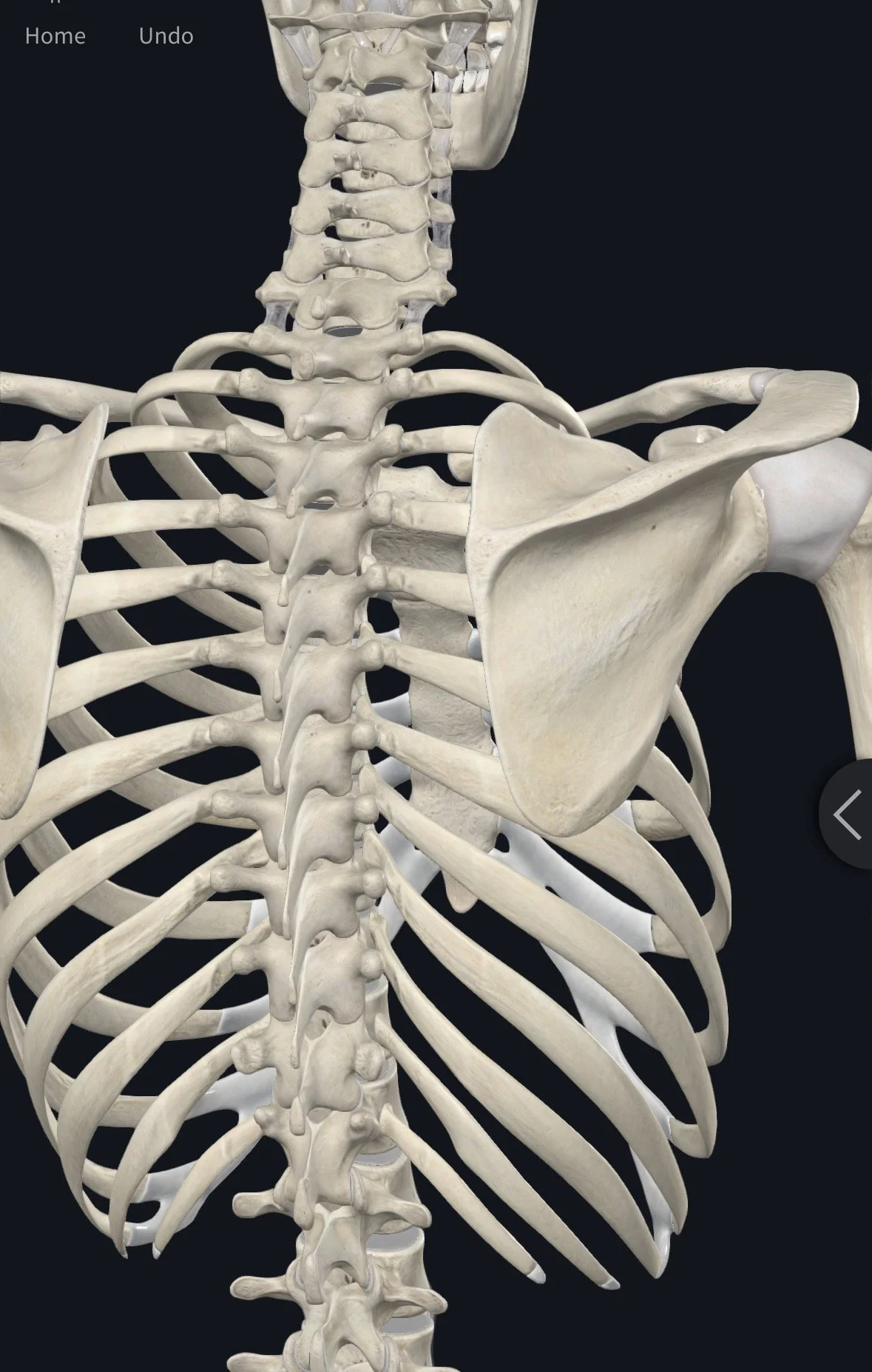
Rib cage - posterior view
Several structures around the ribs can contribute to pain:
1. Intercostal muscles: Located between the ribs, these muscles help with breathing and rib cage movement. They can become strained when subjected to excessive force.
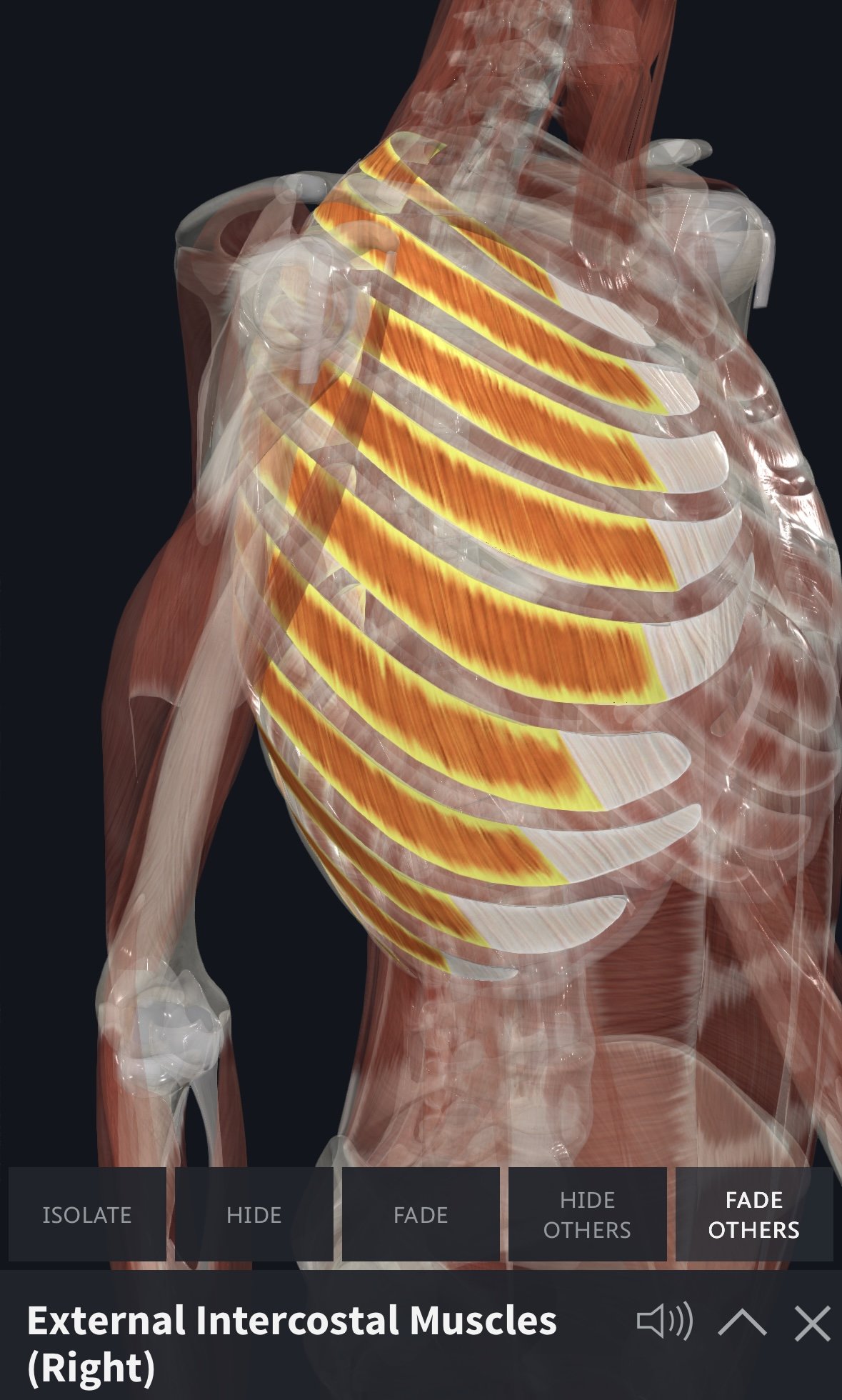
Side view of intercostal muscles
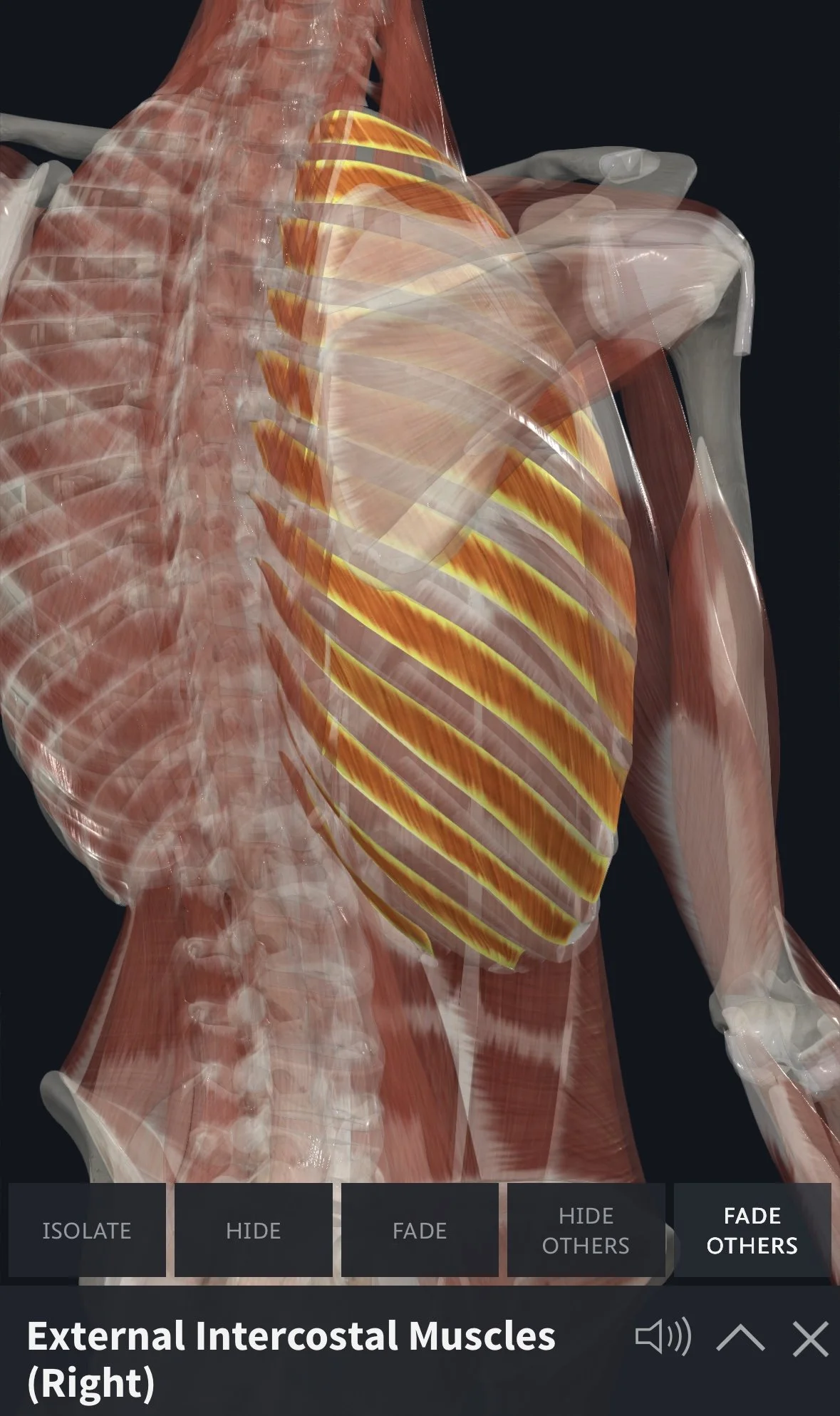
Back view of intercostal muscles
2. Latissimus dorsi (lats): Large muscles extending from your back and pelvis to your upper arms, with attachments that may include the lower ribs. They play an important role in pulling movements, inverts, and shoulder mounts. A lat strain can sometimes feel like pain along the back or side of the ribs.
3. Oblique muscles: These abdominal muscles attach to the lower ribs and help control trunk rotation and side bending.
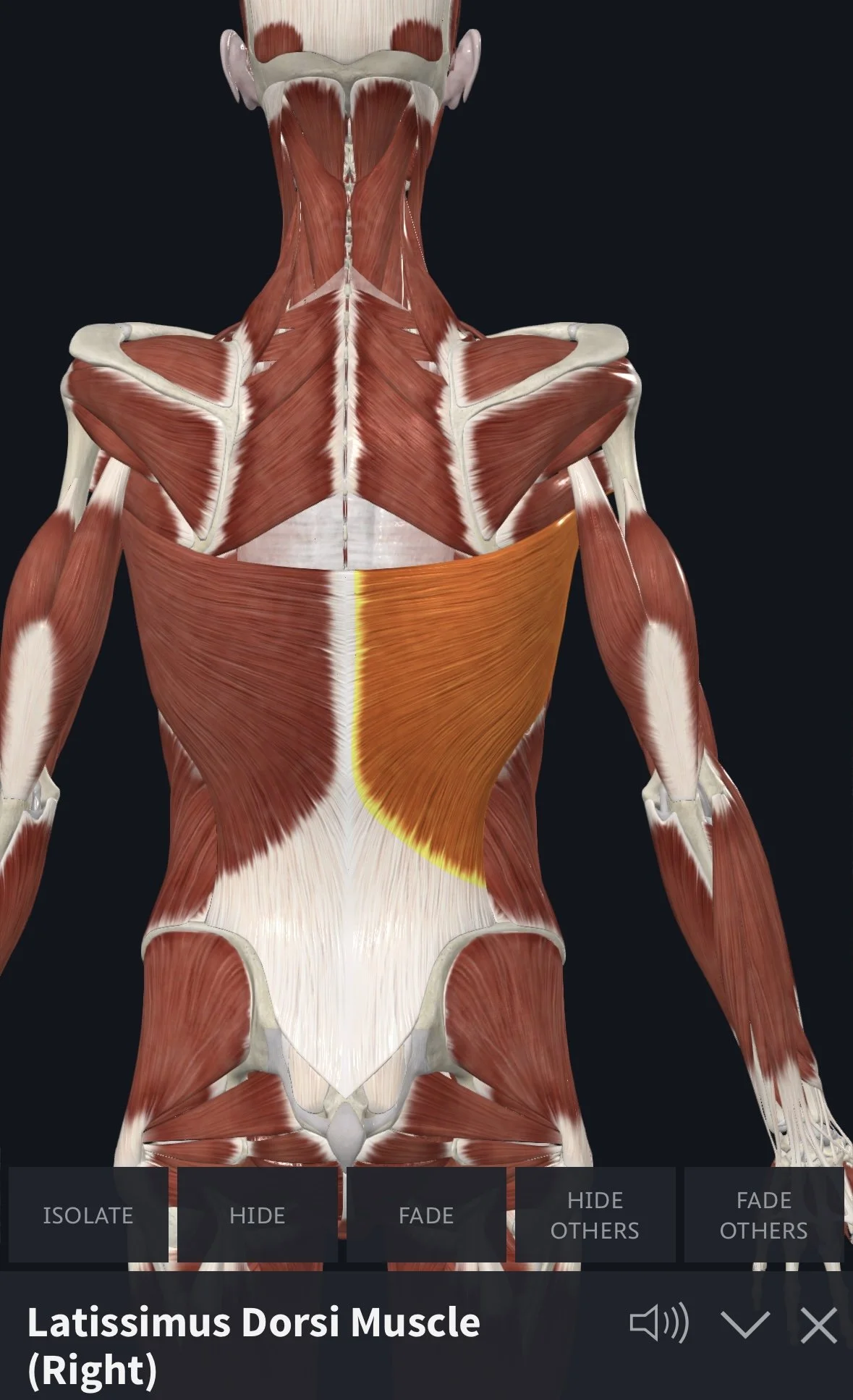
Latissimus Dorsi (lats)
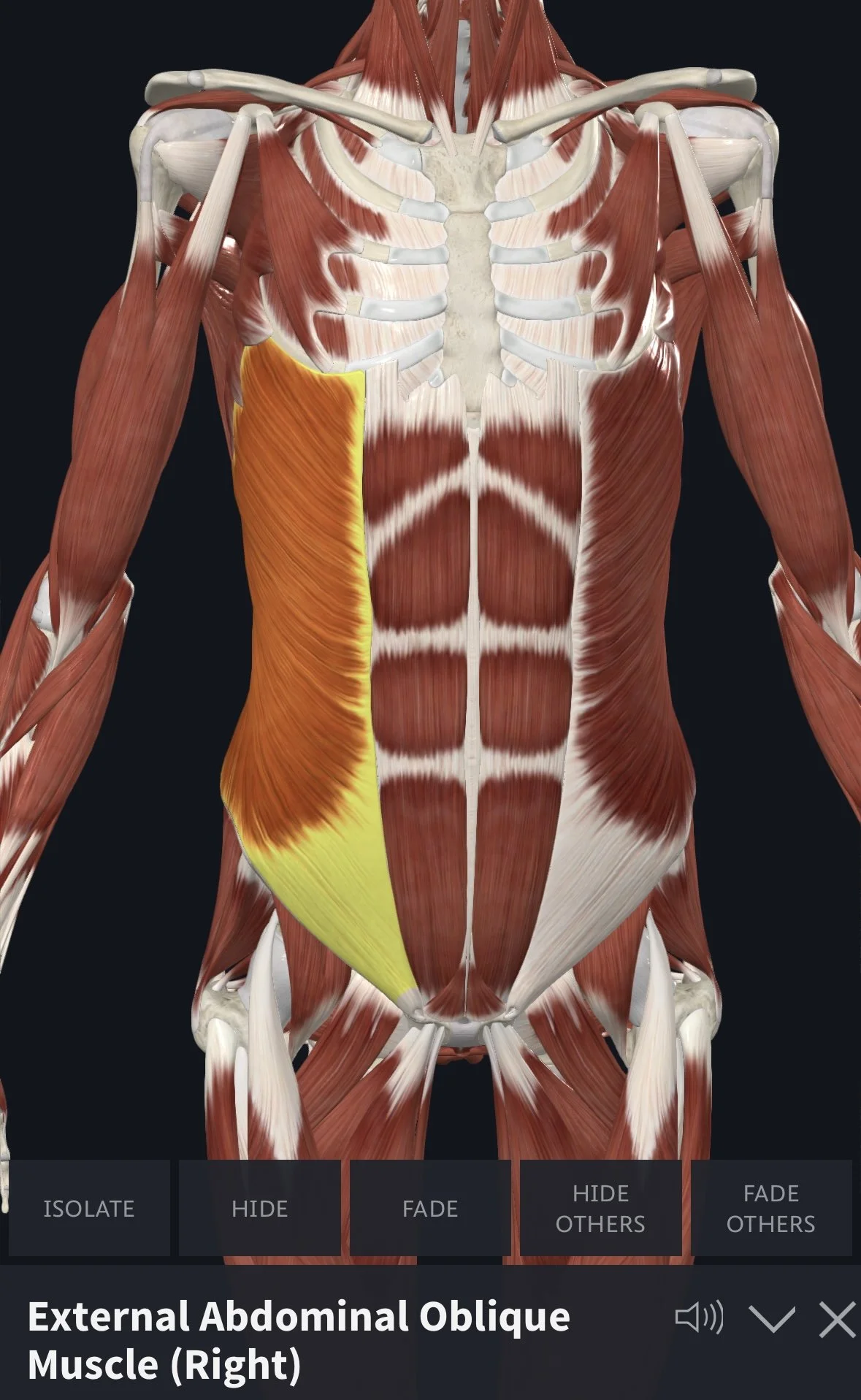
Oblique (External)
4. Rib joints and cartilage: Your ribs connect to the thoracic spine through small joints, while cartilage provides flexibility at the front of your rib cage. These structures can also become irritated or injured.
How Do Pole Dancers Injure the Area Around Their Ribs?
1. Insufficient Shoulder Strength and Control During Dismounts
This is one of the mechanisms I commonly see in beginner and intermediate pole dancers with rib pain.
When performing an invert or shoulder mount, your upper-body muscles need to generate enough force to lift your body. However, controlling the way you come down is just as important as getting up.
During a controlled descent, your muscles often work eccentrically, meaning they produce force while lengthening.
Imagine lowering yourself from an invert or shoulder mount. If you lose shoulder control or start dropping faster than intended, your trunk may suddenly rotate or extend while your arms are still supporting your body weight.
This can place excessive stress on your lats, intercostal muscles, or both, potentially causing a muscle strain. Your obliques and surrounding rib joints may also be affected.
The problem may not be weakness in your intercostal muscles, but rather insufficient shoulder strength and control, or simply muscle fatigue at that point in your training. When your shoulders can no longer adequately support and control your body weight, other structures around your rib cage may end up taking on more stress than they can tolerate.
2. Twisting During Static and Spin Pole Transitions
Think about coming down from a shoulder mount on spin pole, or performing a dismount on static pole that involves rotating your trunk.
Your arms may be fixed in one position while your torso and pelvis rotate in another direction.
Your shoulders and trunk muscles need to work together to control these rotational forces.
If the movement happens faster than you can control, particularly while the muscles are lengthening under load, the tissues around your ribs may become strained.
This explains why some injuries happen during transitions or dismounts rather than the actual tricks.
Being able to hold a position doesn't necessarily mean you have the strength and coordination to enter or exit it safely.
3. Direct Compression Against the Ribs
For more advanced dancers, direct compression against the pole is another mechanism I commonly see.
Tricks such as Broken Doll and Jallegra can place substantial pressure against the lower ribs, sometimes with a large portion of your body weight supported by a relatively small contact area.
This can cause bruising, soft-tissue irritation, or injury to the ribs and their cartilage or joints.
Some dancers may also experience a popping, clicking, or shifting sensation around their lower ribs.
One possible cause is slipping rib syndrome, in which the cartilage connections of the lower ribs (usually ribs 8–10) become excessively mobile and irritate surrounding tissues.
However, clicking doesn't automatically mean a rib has subluxed or dislocated. These symptoms require proper assessment, especially after trauma.
How Do We Treat Rib Pain in Pole Dancers?
The first step is figuring out which structures are involved and how the injury happened.
Was it a sudden pull during an invert? Direct pressure from the pole? Or pain that gradually developed after repeatedly practising the same movement?
Treatment depends on the diagnosis, but here are some general principles.
1. Modify the Aggravating Movements
Temporarily reduce movements that reproduce sharp pain, whether that's shoulder mounts, twisting dismounts, or tricks that compress your ribs.
This doesn't necessarily mean you need to stop all training. You can often continue other exercises as long as they don't aggravate your symptoms.
2. Maintain Comfortable Movement
Keep breathing normally and gently moving your trunk and shoulders within a comfortable range.
You don't need to aggressively stretch the injured area, especially in the early stages.
3. Gradually Rebuild Strength
The exercises will depend on the tissues involved.
Intercostal and oblique strains: Gradual trunk strengthening, such as dead bugs, modified side planks, and resisted rotation.
Lat strains: Progressive pulling exercises, starting with isometric contractions and advancing toward rows, lat pulldowns, and controlled eccentric exercises.
Rib joint or cartilage injuries: Gradual reintroduction of trunk movement and loading, while avoiding excessive compression early on.
Suspected rib fractures or bone stress injuries require a different approach and may need medical assessment before returning to loading.
4. Return to Pole Gradually
The goal isn't just to be pain-free during everyday activities. Your body also needs to tolerate the specific forces involved in pole dancing.
If you injured yourself during an invert dismount, work on controlled pulling and lowering before returning to the full movement.
If the injury came from direct compression, gradually reintroduce positions that place pressure against your ribs.
Pay attention to how your body responds after training, not just during the movement.
Can You Prevent Rib Injuries in Pole Dancing?
While not every injury is preventable, a few things can help reduce the risk:
Build pulling and shoulder strength. Your lats and other shoulder muscles need sufficient strength to support and control your body weight.
Train your dismounts, not just your entries. Practise lowering yourself with control, rather than simply dropping out of a move.
Build core strength and control. Exercises such as dead bugs and side planks can help you stabilize your torso during demanding pole movements.
Train rotational and side-bending movements. Include exercises that strengthen your trunk muscles through rotation and lateral flexion, not just exercises that keep your core stationary.
Avoid repeatedly forcing painful rib-contact positions. Sharp or persistent pain isn't something you should simply push through.
Know when to get off the pole. If you're getting fatigued and starting to lose your form or control, it's time to take a break rather than forcing another repetition.
Manage your training volume. Your tissues need time to adapt to new movements and increased training demands.
Final Thoughts
Rib pain in pole dancers isn't always an intercostal strain. The pain may involve your lats, obliques, rib joints, cartilage, or the ribs themselves. Sometimes several structures are affected together.
That's why I think it's important to understand how the injury happened, rather than simply treating the area where it hurts.
As both a physiotherapist and a fellow pole dancer, I know that being pain-free during everyday activities is only the first step. The real goal is getting back to your shoulder mounts, inverts, and favourite tricks with enough strength and control to tolerate those movements again.
References
Gundersen A, Borgstrom H, McInnis KC. (2021). Trunk Injuries in Athletes. Current Sports Medicine Reports, 20(3), 150–156.
Cleveland Clinic. (2020). How to Cope with an Intercostal Muscle Strain.
Lehane KM Jr, et al. (2025). Approach to Diagnosing and Treating Tears of the Latissimus Dorsi and Teres Major. JSES Reviews, Reports, and Techniques, 5(4), 849–856.
Madeka I, et al. (2023). A Review of Slipping Rib Syndrome: Diagnostic and Treatment Updates to a Rare and Challenging Problem. Journal of Clinical Medicine, 12(24), 7671.
NHS. Broken or Bruised Ribs.
This article is intended for general education and does not replace an individual assessment. New unexplained chest pain, worsening difficulty breathing, or coughing up blood requires urgent medical attention.
