Should you engage your glutes in backbends?
This is probably one of the biggest debates on social media in the circus and flexibility world right now. I think a lot of the confusion comes from a few biomechanics concepts that are often misunderstood.
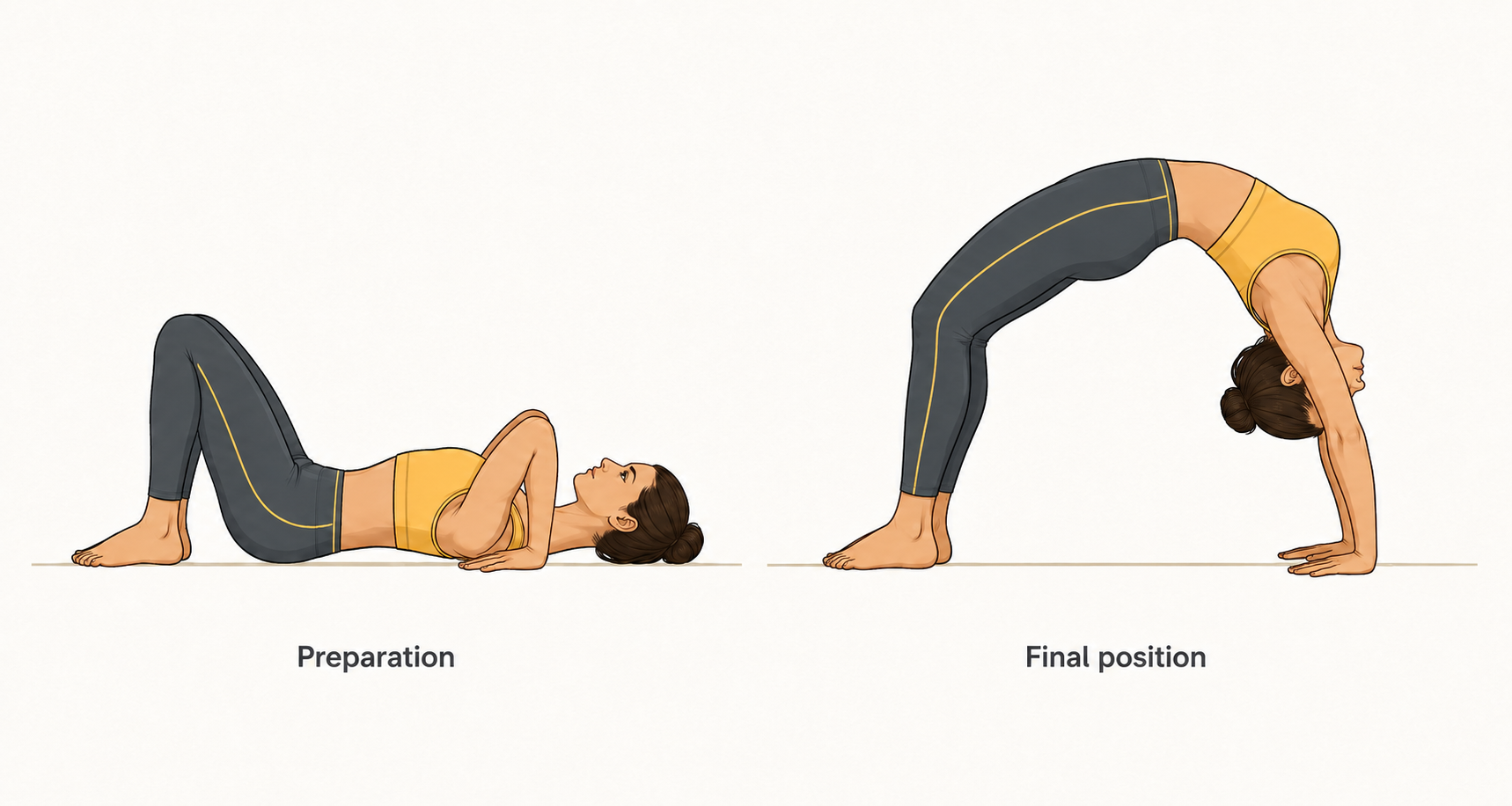
Wheel/Bridge: starting and final position
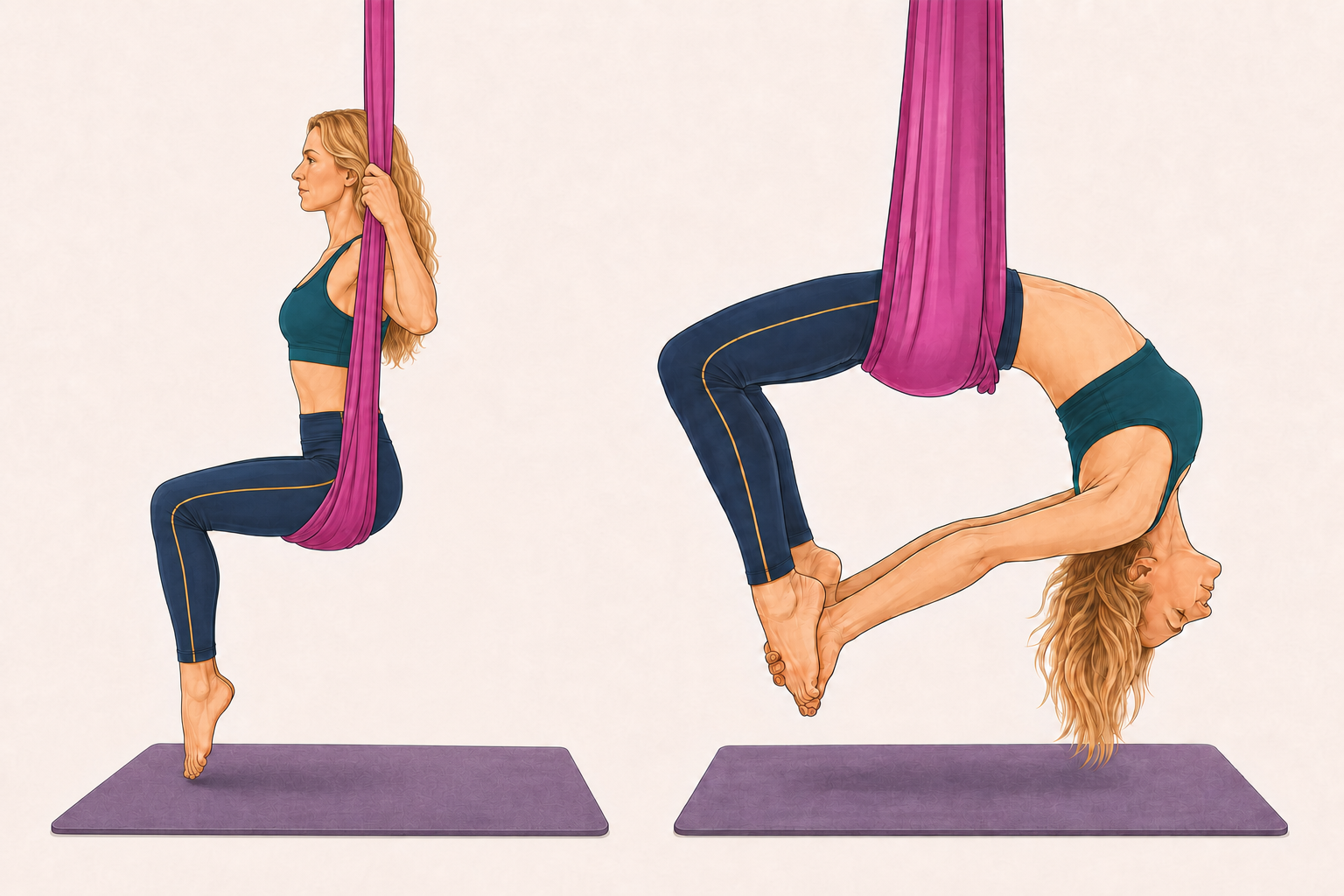
Backbend on hammock: starting and final position
Movement Happens Because Forces Act on the Body
Newton’s Second Law tells us that an object changes its motion when a force acts on it. Since we live in a world where gravity is constantly pulling us downward, any movement against the direction of gravity requires our muscles to generate force.
For example:
Standing up from a chair
Raising your arm overhead
Lifting your hips off the ground
All of these movements require muscles to produce enough force to overcome gravity.
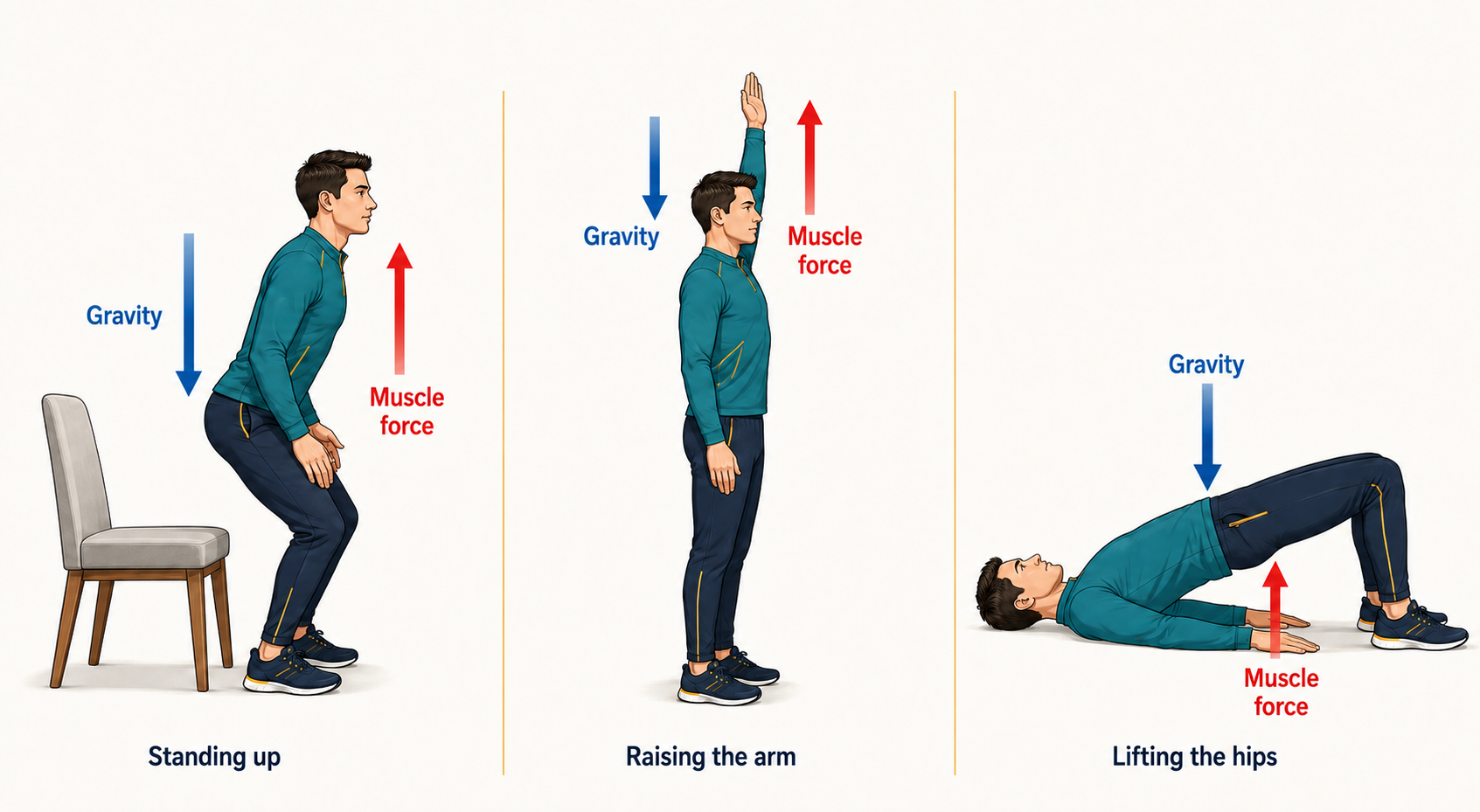
Moving against gravity
Muscle Activation Is Not All-or-Nothing
Your brain doesn’t simply switch a muscle “on” or “off.” Instead, it carefully adjusts how much force is needed for the task.
If you’re lifting a 35 lb kettlebell, your brain recruits many more muscle fibres than if you’re picking up a glass of water. The movement may be similar, but the amount of muscle activation is very different because the force requirements are different.
Your brain controls your muscle activation like a dimmer switch.
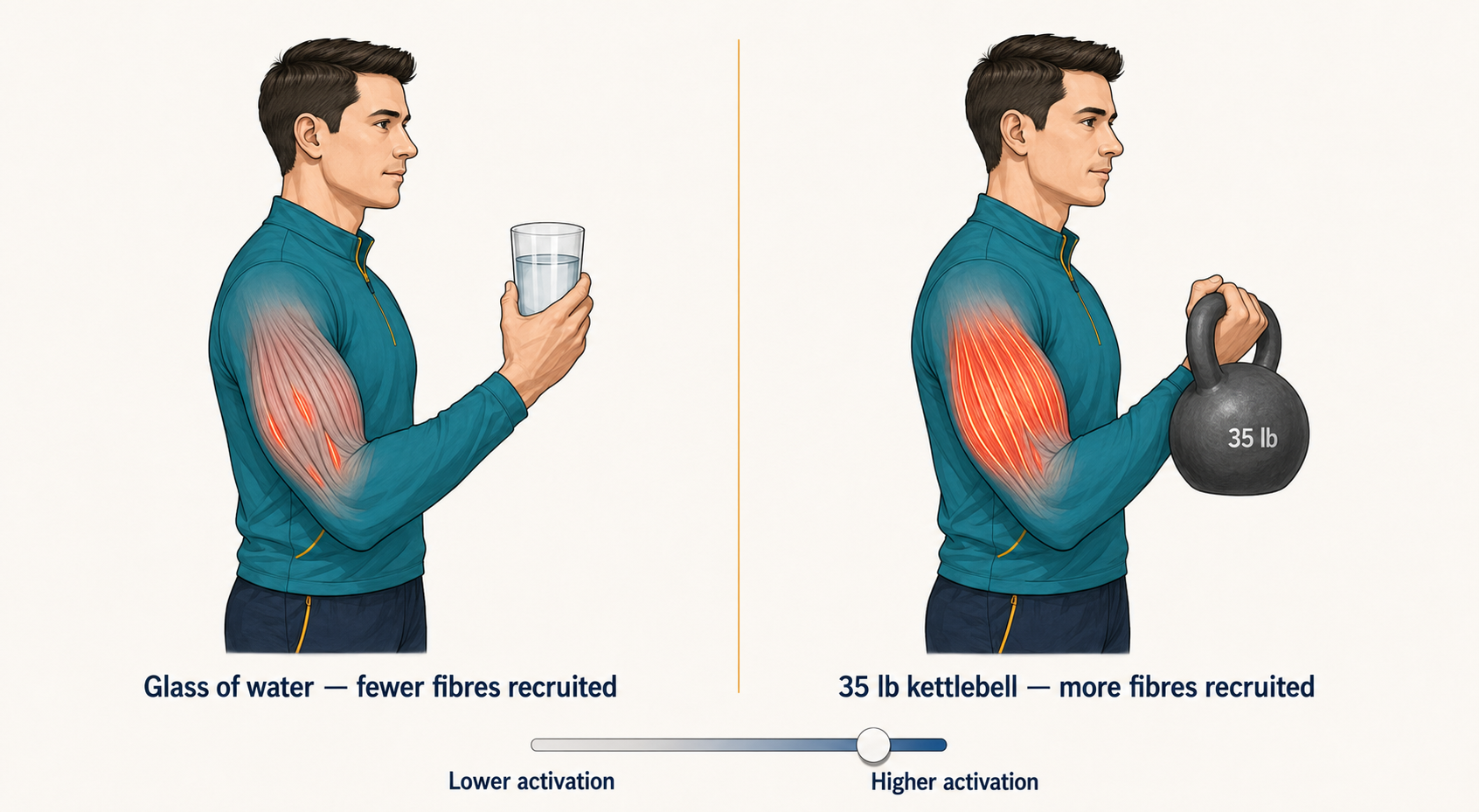
Different levels of muscle recruitment
You Don’t Always Feel Your Muscles Working
Just because you don’t feel a muscle working doesn’t mean it isn’t active.
Think about your neck. Throughout the day, your neck muscles are constantly working to keep your head upright against gravity while also stabilizing it as you walk, run, or turn your body. Yet most people don’t notice this effort because these postural muscles can produce small amounts of force for long periods of time.
Research studies show that our awareness of muscle activation is actually quite poor. Also, if your muscles are activating at, let’s say, 5–10% of your maximum voluntary isometric contraction (MVIC), you may not even feel it because the activation is too small to be perceived or not important enough to reach conscious awareness.
Another example is our upper traps—the muscles on top of the shoulders. We don’t always feel ourselves raising our shoulders, but you can certainly feel how much those muscles were working when you take a moment to relax your shoulders down.
What Happens to Your Glutes in a Wheel or Bridge?
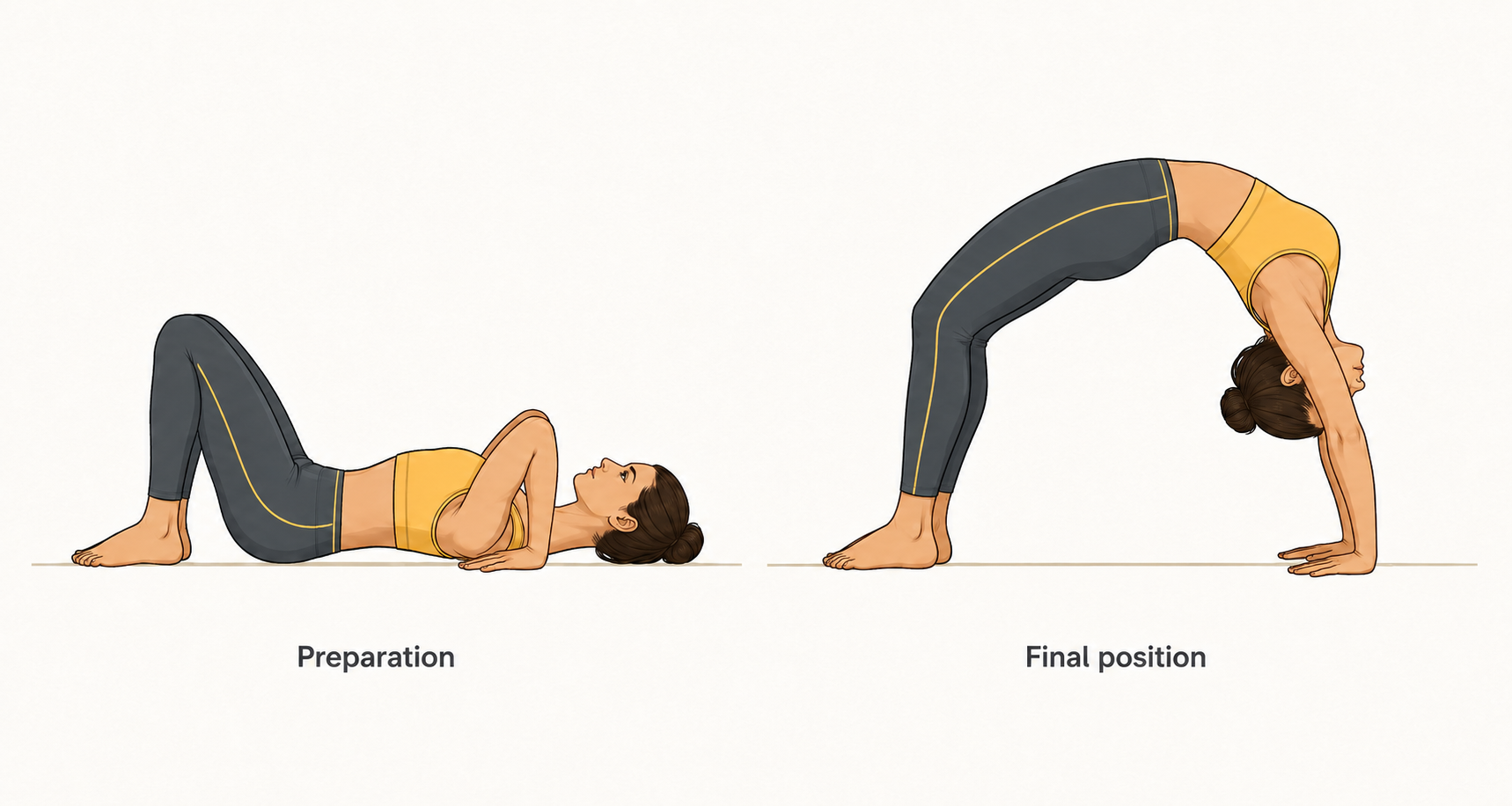
Wheel/Bridge
Starting position: hips are in flexion, shoulders are in some levels of flexion
Final positions: hips are in full extension, shoulders are in full flexion
Let’s use a wheel, or bridge, as an example.
If you’re moving from lying on your back into a wheel, your hips are extending against gravity. Your gluteus maximus, hamstrings, and adductor magnus are the primary muscles responsible for producing that movement, so yes—they need to activate to lift your pelvis off the floor.
Once you’re in the wheel, however, the job changes.
Now you’re no longer creating movement; you’re maintaining a position. The amount of force required is often much smaller than what was needed to get there. At this point, you may not feel your glutes working very much for a few reasons.
The Torque Changes
Once you’re in the wheel, the torque created by gravity is no longer acting in the same way.
Early in the lift, gravity is working against you with a longer lever arm from your hip joint, so you have to work harder to overcome it. Once you’re up in the position, gravity has less leverage on your hip.
Other Muscles Share the Work
Other muscles can also help stabilize the position. Your back, hands, and shoulders all contribute to supporting the load.
Therefore, if you don’t feel your glutes engaging strongly, that doesn’t necessarily mean they’re completely “off.” You might still be engaging them at a lower level, or you might be sharing the load with other muscles in your body.
What About a Passive Backbend While Hanging on a Hammock?
Backbend on hammock
Starting position: hips are in flexion, shoulders are in flexion
Final positions: hips are in full extension, shoulders are in full extension
In a passive backbend on a hammock, you’re in a position where gravity is actually helping you move into the backbend.
Even if your glutes are relaxed, gravity can help bring your hips into extension.
However, if you intentionally contract your glutes in this position, they may help actively pull your hips into greater extension, particularly if tension in your hip flexors—such as the psoas or rectus femoris—is limiting the position.
How I Apply This in Practice
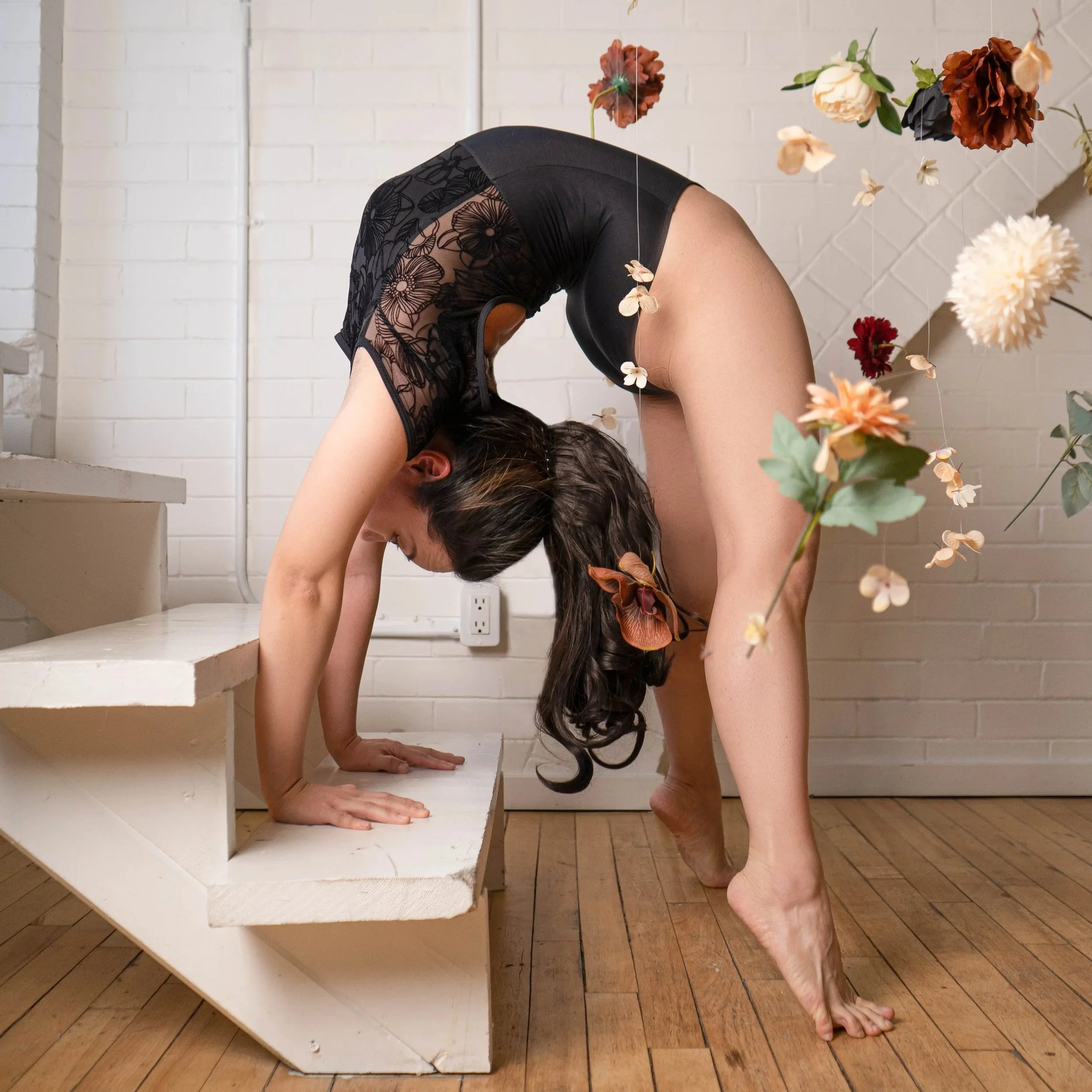
Me in a bridge
Photographer: @kaylens_ca
I usually engage my glutes when I’m transitioning between positions or lifting into a backbend because it is often the most efficient way to create the movement. Once I’m holding the position, my glutes may not need to work as hard. However, I still try to maintain some engagement when it helps me feel more supported or create a nicer line.
If engaging your glutes causes more low-back pain, it may be because several muscles connected through the functional back fascial line are creating too much force closure.
At that point, I don’t think the solution is necessarily to stop engaging your glutes. Instead, it may be more helpful to look at what else in your posterior chain is creating too much tension as your body tries to stabilize.
Ultimately, glute activation is not simply “on” or “off.” The amount of activation you need depends on whether you are lifting into the backbend, actively holding it, or being passively supported. The goal is to find the amount of engagement that helps you move efficiently, feel supported, and create the position you want painfree.
